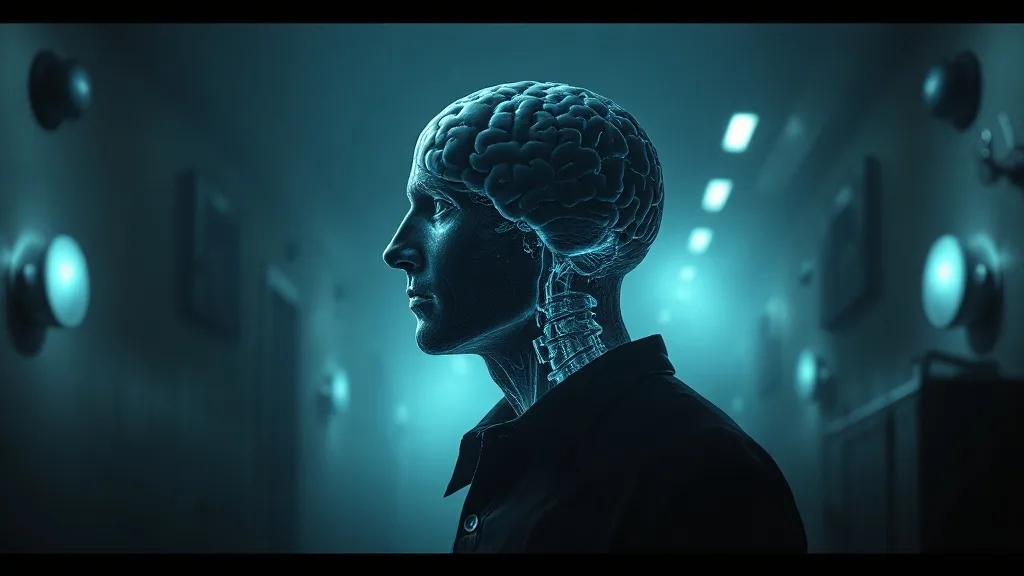
We’ve all been there, glued to a true crime documentary, wondering: How could someone do that? The acts of serial killers are so profoundly disturbing, so far outside the bounds of normal human behavior, that our brains struggle to comprehend them. For years, the default explanation was often just 'evil.' But honestly, that doesn't tell us much, does it? It’s a label, not an explanation. What if we could peer inside the minds of these individuals, not just through their horrific deeds, but through the lens of neuroscience? That’s exactly what researchers are trying to do, shedding light on the complex psychology and physiological underpinnings that contribute to such extreme violence. Understanding the specifics of serial killer brain psychology is less about excusing behavior and more about unraveling the intricate, horrifying tapestry of human dysfunction.
The Brain's Dark Corridors: Neurological Abnormalities
Look, when we talk about severe psychological pathology, we often have to talk about the brain itself. It’s the hardware, after all, and sometimes that hardware is just wired differently or gets damaged. For individuals who become serial killers, there’s often a disturbing pattern of atypical brain structure and function that emerges in post-mortem analyses and, more recently, through neuroimaging studies of incarcerated violent offenders. We’re not talking about a single 'serial killer gene' here — that's too simplistic by far. Instead, it’s a confluence of factors, a perfect storm brewing in the neural pathways.
I've seen this pattern with other extreme behaviors, too, not just in the most notorious cases, but in studies of severe aggression. The prefrontal cortex, for instance, is a major player. It’s our brain’s CEO, responsible for executive functions like impulse control, decision-making, and understanding consequences. When it’s compromised, either structurally or functionally, you can bet that impulse control will suffer. Then there’s the amygdala, a small, almond-shaped region deep within the temporal lobe, critical for processing emotions, especially fear. A 2017 meta-analysis published in NeuroImage: Clinical, examining dozens of studies (n=over 1,500), consistently found reduced amygdala volume and altered activity in individuals with antisocial personality disorder and psychopathy, often traits found in serial killers. Sound familiar? It means the basic machinery for feeling fear or recognizing distress in others might be faulty.
📖 Recommended: The Fawn Response: When Trauma Turns You Into a People Pleaser
Early Life Trauma and Developmental Pathways
Here’s the thing: biology isn't destiny on its own. It's the interaction with environment that often sparks the fuse. When we delve into the backgrounds of serial killers, a truly disturbing commonality emerges: a history of severe childhood trauma. We’re talking about abuse—physical, sexual, emotional—and profound neglect that shapes a developing mind in deeply scarring ways. This isn't just about emotional scars; it’s about physical changes in the brain. The constant stress and terror experienced in childhood can literally alter brain architecture, particularly in areas like the hippocampus (memory and emotional regulation) and the amygdala.
Honest to goodness, it's heartbreaking to read the case files. Early, persistent trauma—what researchers often call Adverse Childhood Experiences (ACEs)—doesn't just hurt a child, it fundamentally rewires them. A landmark 2005 study published in the Archives of General Psychiatry by Teicher et al. (n=300 adolescents) demonstrated how different forms of childhood maltreatment are associated with specific structural alterations in the brain, including reductions in cortical volume and changes in the corpus callosum. These changes impair the development of crucial skills like empathy, trust, and emotional regulation. When a child's basic needs for safety and attachment are repeatedly violated, they can develop severely disorganized attachment styles, making it incredibly difficult to form healthy relationships and process emotions in a normative way. This is a critical piece of the trauma puzzle that contributes to understanding serial killer brain psychology.
The Neurobiology of Empathy and Callousness
One of the most chilling aspects of serial killers is their apparent lack of empathy. They inflict unimaginable suffering without, seemingly, a flicker of remorse. From a neurobiological perspective, this isn't just a moral failing; it’s often a functional deficit. Empathy relies on a complex network of brain regions, including the anterior insula, anterior cingulate cortex, and again, the trusty old prefrontal cortex and amygdala. These areas work together to allow us to understand and share the feelings of others. When this network is compromised, the capacity for empathy plummets.
Research, particularly from neuroscientist James Fallon, who famously discovered he possessed the brain scan of a psychopath, highlights this. Fallon’s 2006 study, later published in Trends in Cognitive Sciences, and his subsequent work often pointed to reduced activity in specific limbic areas associated with empathy in individuals with psychopathic traits. It’s not that these individuals can’t understand what someone is feeling intellectually, but they often lack the emotional resonance – they don’t feel it. This emotional detachment creates a profound barrier, allowing them to view others as mere objects for their gratification or rage, rather than as sentient beings capable of pain. It’s a key component in understanding the cold, calculating nature that often characterizes the psychology of serial killers.
Examining the Psychopathy-Serial Killer Link
Now, let's be clear: not every psychopath becomes a serial killer. The vast majority do not. However, psychopathy is a personality disorder that is disproportionately represented among serial offenders. It's characterized by a constellation of traits: superficial charm, grandiosity, pathological lying, cunning/manipulativeness, lack of remorse or guilt, shallow affect, callousness/lack of empathy, parasitic lifestyle, poor behavioral controls, and a need for stimulation. Sound like anyone you’ve heard about in the news?
The link between psychopathy and serial killer brain psychology is strong because many of the neurological deficits we’ve discussed—impaired PFC function, amygdala abnormalities, issues with neurotransmitter regulation—are hallmarks of psychopathy. Individuals high in psychopathic traits often exhibit a blunted physiological response to stress and fear, meaning their heart rate doesn't race, their palms don't sweat in situations that would terrify a typical person. This gives them an almost uncanny ability to remain calm under pressure, to lie convincingly, and to execute their plans without the emotional interference that would stop most people dead in their tracks. It's this chilling combination of neurological difference, psychological traits, and—critically—the environmental triggers, that can lead to the most extreme manifestations of human depravity, where violence becomes not just an act, but a repetitive, compulsive pattern.
You can learn more about related personality traits and their complexities by exploring resources like Psychology Today's articles on Narcissism, which shares some overlapping characteristics with psychopathy, though they are distinct conditions.
Common Myths and Misconceptions About Serial Killers
The public perception of serial killers is often shaped more by Hollywood than by scientific reality. It’s crucial to separate fact from sensationalized fiction if we want to truly understand the complex psychology at play. Myth #1: All serial killers are brilliant, hyper-intelligent masterminds. Reality: While some, like Ted Bundy, were highly intelligent, many serial offenders are of average or even below-average intelligence. Their cunning often stems from manipulative personality traits and a profound understanding of human vulnerability, rather than extraordinary intellectual prowess. Many make mistakes, are caught due to simple errors, or lack sophisticated planning.
Myth #2: Serial killers are always loners, social outcasts who live in the shadows. Reality: While some fit this stereotype, many others blend in seamlessly with society. They can be charismatic, hold down jobs, have families, and appear perfectly normal to their neighbors and colleagues. This ability to maintain a 'mask of sanity,' as described by psychiatrist Hervey Cleckley, is precisely what makes them so terrifying and difficult to detect. They often excel at deception, making it hard for even close acquaintances to suspect their true nature.
Myth #3: They are born evil and there's nothing that could have changed them. Reality: This is where the discussion of serial killer brain psychology truly gets complex. As we’ve explored, while there might be genetic predispositions and neurological anomalies, these factors are almost always amplified by severe environmental trauma. It's a tragic interplay. While 'evil' is a philosophical concept, the scientific lens points to a combination of inherent vulnerabilities and catastrophic early life experiences shaping a destructive developmental pathway, rather than a predetermined fate.
Frequently Asked Questions
Are serial killers born evil, or do they become that way?
Research suggests it's not a simple 'born evil' scenario. While genetic predispositions (like the MAOA gene variant) and neurological differences (e.g., in the prefrontal cortex or amygdala) can increase vulnerability, these biological factors are almost invariably exacerbated by severe environmental stressors, such as profound childhood abuse and neglect. It's a complex interaction between nature and nurture that shapes the individual's psychological development towards extreme violence.
Can brain scans predict who will become a serial killer?
Absolutely not. While brain scans (like fMRI) can reveal common patterns of dysfunction in violent offenders, they cannot predict future behavior, especially not specific acts like serial killing. These scans show correlations, not causation, and are snapshots of brain activity, not crystal balls. The ethical implications alone would be staggering, let alone the scientific inaccuracies given the multitude of factors involved in complex human behavior.
What role do genetics play in the development of a serial killer?
Genetics play a role as a risk factor, not a sole determinant. Certain genetic variations, such as specific alleles of the MAOA gene, have been linked to an increased propensity for aggression when combined with early life trauma. However, these genes do not predestine an individual to violence; they merely increase vulnerability to environmental influences. Most people with these genetic markers never become violent, highlighting the crucial interplay with environmental factors.
Is there a 'cure' or effective treatment for individuals with serial killer tendencies?
For individuals who have already developed the profound psychological and neurological profiles associated with serial killing, effective 'cures' are generally not available. Treatment typically focuses on managing aggressive impulses and mitigating risk in controlled environments. Early intervention for severe psychopathy or conduct disorders in childhood, addressing trauma and providing structured behavioral therapy, offers the best hope, though even then, success rates can be low for the most severe cases.
The Bottom Line
The journey into serial killer brain psychology is a dark, uncomfortable one, but it’s vital for understanding the most extreme forms of human behavior. What we uncover isn't a simple explanation, but a complex web where altered brain structures, atypical neurochemistry, genetic predispositions, and devastating childhood trauma intertwine. There’s no single switch that flips someone into a monster. Instead, it’s a tragic, often preventable, cascade of factors that erode empathy, fuel aggression, and dismantle the safeguards of a healthy mind. By understanding these biological and environmental vulnerabilities, we move beyond simplistic notions of 'evil' towards a more nuanced, albeit chilling, scientific comprehension. This knowledge, while grim, is ultimately about prevention, early intervention, and perhaps, a better understanding of what makes us human—and what can break us.