Imagine a twenty-year-old cold case, a faded photograph of a victim, and a stack of inconclusive reports. Then, suddenly, a breakthrough: a tiny, almost invisible piece of evidence, tucked away for decades, reveals its secret. It’s DNA, the very blueprint of life. For many of us, our understanding of forensic science comes from TV shows, where a lab tech swipes a Q-tip and – BAM! – the killer’s identified in an hour. Honestly, it’s a lot more complicated than that, and often, much more fascinating. The reality of how DNA evidence works in criminal cases is a testament to scientific rigor, meticulous procedure, and the sheer power of genetic information. It’s not magic; it’s science, painstakingly applied.
It involves a complex journey from crime scene to courtroom, fraught with potential pitfalls and incredible triumphs. We’re talking about strands of genetic material so small they're invisible to the naked eye, yet capable of definitively linking someone to a crime or, just as crucially, proving their innocence. This isn't just about sensational headlines; it's about justice, closure, and the tireless pursuit of truth. Let's pull back the curtain on the actual science at play.
Understanding the Genetic Fingerprint: DNA in Forensics
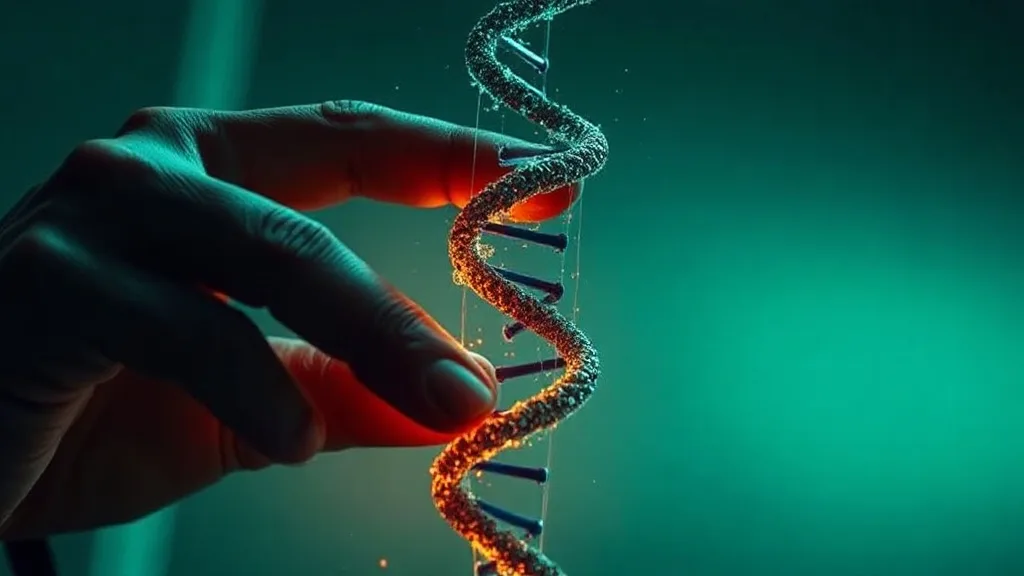
Look, at its core, DNA—deoxyribonucleic acid—is a molecule carrying the genetic instructions used in the growth, development, functioning, and reproduction of all known living organisms. It's the ultimate biological instruction manual. What makes it so revolutionary in forensics isn't just that it’s unique to almost every individual (except identical twins), but that it's left behind almost everywhere we go. Skin cells, saliva, blood, hair follicles—each holds a wealth of identifiable information.
📖 Recommended: The Anxious-Avoidant Trap: Breaking the Toxic Push-Pull Cycle for Good
Forensic scientists aren't actually mapping your entire genome to catch a criminal; that would be prohibitively complex and expensive. Instead, they focus on specific, highly variable regions of DNA called Short Tandem Repeats (STRs). These are short sequences of DNA, typically 2-7 base pairs long, that repeat many times in a row. The number of repeats at specific locations on a chromosome varies wildly from person to person. A 2018 review published in the Journal of Forensic Sciences highlighted how advancements in STR analysis have continuously refined our ability to differentiate individuals with astonishing precision, effectively creating a 'genetic fingerprint.'
By analyzing multiple STR loci (usually 13-20 different ones in the United States, plus one for gender identification), the probability of two unrelated individuals having the exact same combination of STR profiles becomes astronomically small—often less than one in a quadrillion. This incredible discriminatory power is precisely why DNA has become such a cornerstone of modern criminal investigations, often providing definitive answers where other forms of evidence fall short.
What Research Reveals About DNA's Reliability
For decades, scientific research has consistently illuminated exactly how DNA evidence works and affirmed its extraordinary reliability in criminal justice. The foundational principles of DNA profiling, especially using STR analysis, have undergone extensive validation studies, peer review, and continuous refinement since their widespread adoption in the late 1980s and early 1990s. This isn't some fringe science; it's an established discipline.
Research published in journals like Forensic Science International: Genetics and the Journal of Forensic Sciences consistently demonstrates the high discriminatory power of STR profiles. For instance, a 2017 meta-analysis involving numerous population databases showed the probability of a random match for a full CODIS profile being exceedingly low, often in the realm of one in many trillions. These aren't just theoretical numbers; they're derived from vast empirical data. The scientific community's consensus on the validity and robustness of DNA profiling is virtually universal, providing a strong basis for its use in courts worldwide.
However, the science also meticulously defines the boundaries and potential pitfalls. Studies also explore scenarios like low-template DNA (LTDNA) analysis and mixed samples, refining the statistical models and interpretation guidelines to ensure accuracy even in challenging conditions. The ongoing research helps to strengthen the framework, making sure that when an analyst states a match, it's backed by the most current and rigorous scientific understanding. You can delve into the breadth of this research yourself via resources like PubMed or Google Scholar, where thousands of peer-reviewed articles detail the science.
Navigating Common Challenges in DNA Analysis
- Contamination: This is a persistent headache for forensic scientists. It occurs when extraneous DNA from non-suspects (investigators, lab personnel, even prior occupants of the crime scene) gets mixed with the evidence. Even a tiny amount of foreign DNA can complicate interpretation, especially with sensitive modern techniques.
- Degradation: DNA is robust, but not immortal. Exposure to environmental factors like heat, humidity, UV light, bacteria, or chemicals can break down the DNA molecule over time. This leads to fragmented samples, which might yield only a partial DNA profile, making comparisons more difficult.
- Mixed Samples: Imagine a fight where multiple people are involved, or a shared object handled by many. Mixed DNA samples, containing genetic material from two or more individuals, are incredibly common. Deconvolving these mixtures to identify individual contributors can be a complex analytical and statistical challenge, requiring specialized software and expert interpretation.
- Low-Template DNA (LTDNA): This refers to samples containing very small amounts of DNA, sometimes just a few cells. While PCR can amplify these tiny amounts, LTDNA is more susceptible to stochastic (random) effects during amplification, potentially leading to 'allele drop-out' (missing alleles) or 'allele drop-in' (false alleles), making interpretation tricky.
- Familial DNA Searching: This advanced technique involves searching DNA databases for partial matches to a crime scene profile, aiming to identify relatives of the perpetrator. While powerful for cold cases, it raises significant ethical and privacy concerns, as it can bring innocent individuals into an investigation based on their family ties.
Separating Fact from Fiction: DNA Myths
The ubiquity of DNA in popular culture has, unfortunately, spawned a few persistent myths. One common misconception is that DNA evidence is always infallible and automatically leads to a conviction. Not true at all. While highly powerful, DNA is still just one piece of evidence. Its presence at a scene doesn't automatically mean guilt; context is everything. An individual’s DNA might be present due to innocent contact, secondary transfer (like shaking hands with someone who then leaves cells at a scene), or even intentional planting—though the latter is exceedingly rare and difficult to do convincingly.
Another myth is that any tiny speck of biological material can instantly generate a full, pristine DNA profile. While low-template DNA analysis has indeed pushed boundaries, working with minute or degraded samples is far from straightforward. These samples are more prone to the challenges of degradation and contamination, often yielding only partial profiles or requiring highly specialized, and sometimes controversial, interpretation methods. It's not a magic bullet that always gives a perfect answer.
Finally, some believe that DNA evidence is found at every single crime scene. This simply isn't the case. Perpetrators can take extreme measures to avoid leaving biological material, or environmental conditions might degrade any evidence before it can be collected. Just because DNA isn't found doesn't mean a crime didn't happen or that other forms of evidence aren't valid. The absence of DNA is just as much a piece of data as its presence, informing investigators about the nature of the crime and the perpetrator's actions.
Frequently Asked Questions
How long can DNA evidence last?
DNA can last for many years, even decades, under ideal conditions—cool, dry, and dark environments. However, exposure to heat, moisture, sunlight, and bacteria accelerates degradation. While intact DNA is best, even degraded fragments can sometimes yield usable partial profiles, especially with modern amplification techniques.
Can DNA evidence be faked or planted?
Theoretically, yes, but in practice, it's incredibly difficult to fake or plant DNA evidence convincingly. Forensic protocols are designed to detect such tampering, and the complex chain of custody, along with the need for a full, consistent profile, makes it highly improbable for a perpetrator to successfully frame someone with planted DNA without leaving other detectable clues.
What's the difference between forensic DNA and ancestry DNA testing?
Forensic DNA profiling (STR analysis) focuses on specific, highly variable non-coding regions to establish individual identity with high statistical certainty. Ancestry DNA testing, like those from commercial services, typically analyzes a much broader set of markers (SNPs) across the genome to determine ethnic origins or familial relationships, not for individual identification in criminal matters.
How accurate is DNA profiling?
DNA profiling, when conducted under strict protocols by accredited laboratories, is exceptionally accurate. The probability of a random, unrelated individual matching a full forensic DNA profile is typically in the order of one in many trillions, making it one of the most powerful and reliable forms of evidence in criminal investigations.
The Bottom Line
The journey of DNA evidence from a tiny, unseen speck at a crime scene to a pivotal piece of testimony in a courtroom is a remarkable feat of science and human ingenuity. It’s a process demanding precision, ethical considerations, and a deep understanding of genetics. While it isn't the magical solution depicted in fiction, the reality of how DNA evidence works is far more impactful, offering unparalleled insights into criminal events and providing a powerful tool for both conviction and exoneration. It has reshaped our justice system, breathing new life into cold cases and offering a level of certainty previously unimaginable. But remember, like any powerful tool, its effectiveness ultimately rests on the careful hands and minds that wield it.