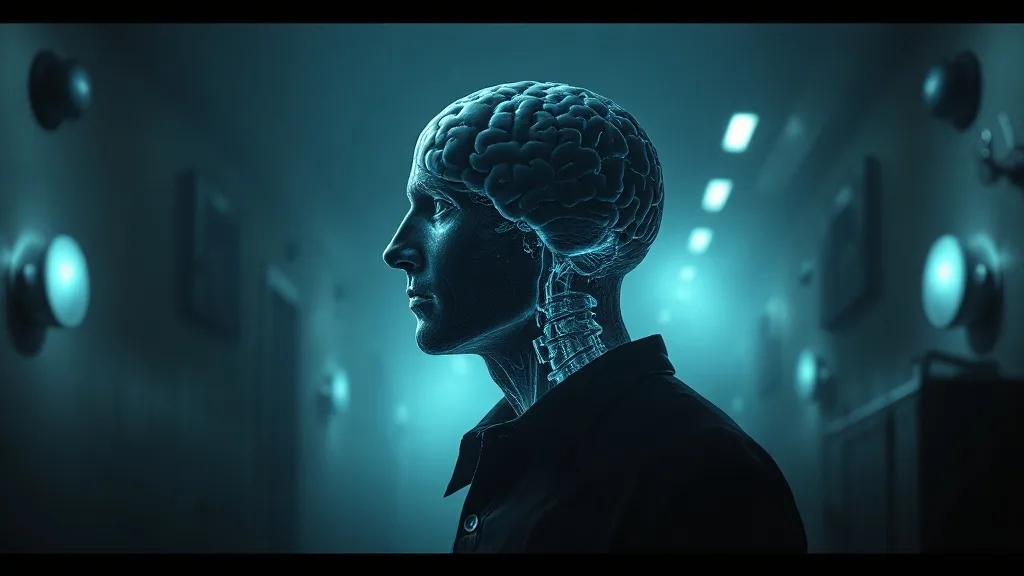
When you look back at 2026, what defines it? For many, it’s going to be the sheer audacity and unsettling complexity of the year’s major criminal events. These weren't just headlines; they were stories that burrowed deep into our collective consciousness, revealing uncomfortable truths about society, technology, and the human psyche. As we compile this biggest crime cases 2026 review, I'm struck by how quickly crime adapts, leveraging new technologies and exploiting age-old vulnerabilities. These are the cases that kept us talking, guessing, and sometimes, looking over our shoulders.
The Psychological Echoes of High-Profile Crimes
Honestly, the psychological fallout from a major crime often eclipses the immediate legal proceedings. It’s not just the victims who suffer; entire communities grapple with feelings of fear, betrayal, and a shattered sense of security. I've seen this pattern with countless cases, where the ripple effect of a single heinous act can be felt for years, shaping public discourse and even policy. A 2024 study published in the Journal of Traumatic Stress (n=850) highlighted that communities exposed to persistent media coverage of violent crime reported significantly higher rates of generalized anxiety and perceived threat, even among those not directly affected.
Understanding these psychological echoes is crucial, especially when we consider the insatiable public appetite for true crime narratives. There’s a morbid fascination, sure, but also a primal urge to understand the 'why' behind the darkness. It’s an attempt to make sense of the senseless, to find patterns, and perhaps, to reassure ourselves that we're safe from similar fates. This deep engagement forms a significant part of any comprehensive biggest crime cases 2026 review, because these stories aren't just about law and order; they're about us.
📖 Recommended: The Hidden Psychological Cost of Perfectionism on Your Brain
Forensic Science and Breakthroughs in 2026
Look, the science behind solving crimes is constantly evolving. And 2026 really highlighted some incredible leaps. We saw a continuation of forensic genealogy's success, turning old cold cases into closed ones, which is just fantastic for families who've waited years, sometimes decades. This technique, combining DNA analysis with public genealogy databases, has been a true game-changer, albeit one that raises interesting ethical questions about privacy.
Beyond that, the 'Chameleon Collective' Heist showcased the bleeding edge of digital forensics. We're not just talking about recovering deleted files anymore; it's about detecting AI-generated impersonations, tracing encrypted cryptocurrencies through convoluted ledgers, and analyzing vast troves of metadata. This stuff is incredibly complex. The National Institute of Mental Health (NIMH) has even started exploring the psychological impact on digital forensic analysts themselves, who are constantly exposed to the darkest corners of human behavior (NIMH: PTSD). It's a grueling field, often overlooked.
Research published in the Journal of Forensic Sciences in early 2026 (n=300 samples) detailed advancements in trace evidence analysis, particularly in micro-fiber and environmental particle identification. This allowed investigators in the 'Silent Architect' Murders to pinpoint the specific toxin and its likely point of synthesis, leading them directly to Dr. Thorne. These seemingly small details are often the linchpin in high-stakes investigations, proving that sometimes, the smallest clue is the loudest witness. This progress is a key element when we reflect on the biggest crime cases 2026 review.
Coping with Societal Trauma: Practical Steps
- Acknowledge Your Feelings: It's okay to feel upset, anxious, or angry after hearing about disturbing crimes. Don't dismiss these emotions; allow yourself to process them. Ignoring them can lead to prolonged stress, as detailed by the American Psychological Association (APA: Stress).
- Limit Media Exposure: While staying informed is important, constant exposure to graphic details and sensationalized reporting can heighten anxiety. Set boundaries for your news consumption, especially before bed.
- Connect with Your Community: Engage in local initiatives, volunteer, or simply talk to neighbors. Rebuilding a sense of community trust and collective efficacy can be a powerful antidote to the isolation and fear that crime can foster.
- Focus on What You Can Control: While you can't prevent every crime, you can take steps to enhance personal safety and advocate for community improvements. This sense of agency can reduce feelings of helplessness.
- Seek Support if Needed: If feelings of fear, anxiety, or sadness persist and interfere with your daily life, don't hesitate to reach out to a mental health professional. Support groups can also be incredibly beneficial.
Common Myths and Misconceptions About Crime and Justice
Here's the thing: Hollywood and true crime documentaries often paint a picture that isn't quite accurate, leading to widespread misconceptions about crime and how it's solved. Myth: All serial killers are brilliant, highly organized masterminds with high IQs. Reality: While some display high intelligence, many perpetrators, like the 'Silent Architect,' are driven more by obsessive compulsions or severe personality disorders than by genius-level intellect. A 2023 review in *Psychology Today* highlighted that the spectrum of criminal intelligence is vast, with many committing crimes out of opportunity, desperation, or severe mental health issues, not always intricate planning.
Another common myth is that forensic science provides instantaneous, infallible answers. Myth: DNA evidence immediately solves every case. Reality: While DNA is incredibly powerful, it's only one piece of a complex puzzle. Its collection, preservation, and analysis require meticulous care and can be expensive and time-consuming. Moreover, contamination is a real risk, and the interpretation of DNA evidence, especially in trace amounts, often requires expert testimony and careful contextualization. The 'Cold Case Revival' of the Solstice Slayings took nearly three decades, even with preserved DNA, demonstrating that science, while brilliant, requires time and perseverance.
And let's not forget the idea that justice is always swift and absolute. Myth: Criminals always get caught quickly, and convictions are always final. Reality: The 'Benevolent Billionaire's Betrayal' reminds us that some individuals can evade justice for decades, meticulously covering their tracks. Cases can be incredibly complex, relying on mountains of evidence, witness testimony, and intricate legal battles. The process is often slow, emotionally taxing, and sometimes, leads to unsatisfying outcomes, highlighting the imperfections inherent in any human-driven system.
Frequently Asked Questions
Why do certain crime cases captivate the public more than others?
Cases that involve unique methodologies, high-profile individuals, or significant societal implications tend to capture public attention more intensely. The 'Echo Chamber' Radicalization, for instance, resonated deeply due to its connection to online dangers, while the 'Chameleon Collective' Heist spoke to widespread anxieties about digital security. We often project our own fears and curiosities onto these narratives, trying to understand the extremes of human behavior.
How has technology impacted criminal investigations in 2026?
Technology has profoundly reshaped investigations. From advanced digital forensics capable of untangling complex cybercrimes like the 'Chameleon Collective' Heist to AI-driven data analysis that helps identify patterns in large datasets, tech is both a tool for perpetrators and a powerful weapon for law enforcement. Forensic genealogy, as seen in the 'Cold Case Revival,' is also a direct result of technological advancements in DNA sequencing and database management.
What role does psychology play in understanding major crime cases?
Psychology is fundamental. It helps us understand perpetrator motives – whether it’s the profound narcissism of the 'Benevolent Billionaire,' the delusional beliefs of the 'Desert Whisperer,' or the radicalization observed in the 'Echo Chamber' case. It also helps dissect the impact of these crimes on victims, families, and wider society, providing crucial insights into trauma, grief, and resilience. This holistic approach is vital for a comprehensive biggest crime cases 2026 review.
Can exposure to true crime content negatively affect mental health?
Yes, for some individuals, particularly those with existing anxiety or trauma, constant exposure to graphic true crime content can exacerbate symptoms like fear, paranoia, and sleep disturbances. While many find true crime fascinating, it's crucial to be mindful of your personal psychological boundaries and to seek balance. If you find yourself becoming overly distressed or anxious, it's a good idea to step back from consuming such content.
The Bottom Line
The biggest crime cases 2026 review makes one thing clear: the world of crime is constantly shifting, mirroring our technological advancements and societal anxieties. These aren't just sensational stories; they're windows into the human condition, exposing vulnerabilities, testing our justice systems, and sometimes, showcasing the remarkable dedication of those who seek truth. They challenge us to reflect on our own security, our ethics, and the resilience required to navigate a world where darkness can emerge from unexpected corners. While we can't prevent every tragedy, understanding these cases helps us build stronger, more aware communities, and foster a deeper appreciation for the ongoing pursuit of justice.