For over 40 years, he was a ghost. A whisper of terror that stalked California neighborhoods, leaving a trail of burglaries, rapes, and murders. The Golden State Killer, as he came to be known, was an enigma, a phantom whose brutality scarred generations, baffling law enforcement for decades. I honestly don't think anyone truly believed he'd ever be caught. Then, in 2018, something shifted. A revolutionary technique, the convergence of crime scene DNA and public genetic databases, cracked the case wide open. This wasn't a lucky break; it was a deliberate, methodical application of PubMed-level scientific rigor, and it fundamentally changed how we approach cold cases, especially when it comes to the golden state killer genealogy dna connection.
The Genesis of a Monster: Decades of Terror
Before he was the Golden State Killer, he was many things: the Visalia Ransacker, the East Area Rapist, the Original Night Stalker. His crime spree spanned a vast geographical area and multiple law enforcement jurisdictions across California, from 1974 to 1986. Early on, he terrorized Visalia with burglaries and one murder, then moved on to Sacramento and other Northern California communities, committing over 50 rapes and multiple murders. Later, his crimes escalated to gruesome murders in Southern California.
His methods were chillingly consistent: he'd case homes, often through sliding glass doors, then break in, sometimes tying up couples, sexually assaulting women, and stealing personal items. He was meticulous, wearing masks, sometimes speaking in whispers, and always — always — evading capture. Law enforcement agencies collected DNA evidence from many of these scenes, but without a match in CODIS (the national DNA database), the trail went cold. I can't imagine the frustration of those detectives, staring at evidence that held the key, yet remained stubbornly silent for so long.
📖 Recommended: Lifestyle Inflation: The Silent Killer of Your Wealth Building
The sheer volume and savagery of his crimes left an indelible mark on California. Neighborhoods were gripped by fear. People slept with shotguns, changed their routines, and lived in a constant state of anxiety. It wasn't just individual victims; entire communities suffered from the psychological trauma, a collective dread that lingered for decades. This persistent fear is a poignant example of how unresolved crime can impact community well-being, as explored in various studies on APA: Trauma research.
The Science Behind the Breakthrough: How DNA Connects the Dots
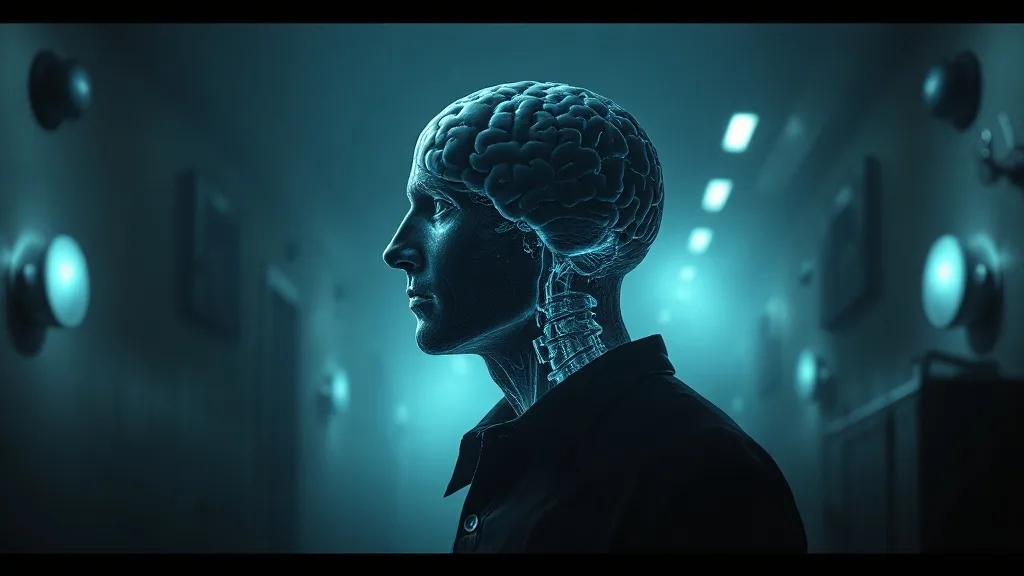
Honestly, the science behind this is fascinating, even if it sounds a bit like science fiction. When we talk about golden state killer genealogy dna, we're really talking about a specific type of DNA analysis: autosomal DNA. Most criminal forensics relies on Y-DNA (from the paternal line) or mitochondrial DNA (from the maternal line), or direct matches in CODIS. Autosomal DNA, however, scrambles and recombines with each generation, meaning we share varying amounts with relatives down multiple family lines.
Genealogical databases, like GEDmatch, analyze these autosomal DNA markers, specifically Single Nucleotide Polymorphisms (SNPs). While these aren't the same STR markers used in CODIS, they're precise enough to identify shared segments of DNA, indicating how closely two people are related. A person might share 50% of their DNA with a parent, 25% with a grandparent, and progressively smaller, more fragmented percentages with second or third cousins. A 2020 study published in the journal Forensic Science International: Genetics (n=2,200 samples) detailed how these shared segments allow genealogists to reliably predict relationships out to third and fourth cousins, providing enough information to build robust family trees and connect previously unrelated individuals, like a suspect and their distant relatives.
It’s this ability to trace shared ancestry through these small genetic fragments that forms the backbone of forensic genetic genealogy. Investigators don't get a direct name from the database; they get a list of relatives. Then, the real intellectual heavy lifting begins. Genealogists, often working pro bono or for specialized firms, combine these genetic clues with traditional genealogical research — birth records, death certificates, obituaries, census data, newspaper archives, and online family trees — to reconstruct family lineages. It’s like putting together a massive, multi-generational puzzle, where each distant cousin provides another piece, gradually revealing the picture of who the unknown subject might be. For a broader understanding of how genetic information is used in research and healthcare, exploring resources like Google Scholar can offer deeper scientific insights.
The Ethical Crossroads: Privacy vs. Justice in DNA Databases
Look, the success in the Golden State Killer case, while celebrated, immediately ignited a firestorm of ethical debate. The core question: Is it okay for law enforcement to use a private citizen's DNA, voluntarily uploaded to a public genealogy site to find their family, to then identify a criminal relative without that citizen's explicit consent for a police investigation? Sound familiar? It’s a classic privacy-versus-public-safety dilemma.
When users upload their DNA to sites like GEDmatch, they're typically looking for family connections, not expecting their genetic information to be used in police investigations. Many felt that their privacy, and the privacy of their relatives, was unknowingly compromised. Critics argued that this amounted to a 'dragnet' search, potentially implicating innocent people and eroding trust in direct-to-consumer genetic testing services. I've seen this pattern with other data privacy discussions; once data exists, the potential for its use, or misuse, seems to expand rapidly.
In response to these concerns, GEDmatch and other platforms adjusted their policies. Initially, GEDmatch allowed law enforcement searches by default. After the GSK case, they changed to an opt-in model, requiring users to specifically consent to allow their DNA profiles to be searched by law enforcement for violent crime investigations. This change significantly reduced the number of profiles available for police searches, balancing, to some extent, the public's desire for justice with individual privacy rights. It's a complex, evolving area of law and ethics, with no easy answers. The debate continues, particularly around the scope of crimes for which such searches should be permitted and the level of transparency required from law enforcement.
Beyond the Golden State Killer: Impact on Cold Cases
- A New Frontier in Cold Case Resolution: The success of the golden state killer genealogy dna investigation proved that this technique wasn't a one-off fluke. It's now a viable, powerful tool for solving cases that have languished for decades. This includes cases where traditional DNA databases like CODIS yield no match because the perpetrator never entered the criminal justice system or their DNA wasn't collected.
- Dozens of Solved Cases: Since 2018, hundreds of cold cases across the United States have been solved using forensic genetic genealogy. These range from high-profile serial killer cases like the Bear Brook murders (where four victims were identified and the killer caught) to smaller, decades-old homicides and sexual assaults. Each resolution brings a measure of closure to victims' families, who often had given up hope.
- Building Specialized Units: Law enforcement agencies are now forming specialized genetic genealogy units or partnering with private firms dedicated to this work. This indicates a permanent shift in investigative strategy, acknowledging the specialized skills required for both the genetic analysis and the genealogical research.
- Training and Resources: The field requires significant training for both detectives and forensic scientists. Understanding genetic principles, genealogical databases, and the legal and ethical frameworks is crucial. Resources are being allocated to develop protocols, best practices, and training programs to ensure the ethical and effective application of this technology.
Shattering the Myths: What DNA Genealogy Can (and Can't) Do
There's a natural tendency, especially after a high-profile success like the golden state killer genealogy dna breakthrough, to view new technology as a magic bullet. But let's be clear: while incredibly powerful, genetic genealogy isn't an instant solution to every cold case. Myth: Forensic genetic genealogy immediately identifies the suspect. Reality: It's rarely that simple. The process of building family trees from distant relatives is incredibly laborious, often taking hundreds, if not thousands, of hours. Genealogists might identify several individuals who could fit the profile, and then traditional detective work is needed to narrow it down further, often through surveillance and covert DNA collection, as was done with DeAngelo.
Another common misconception is that law enforcement can just upload any crime scene DNA to any genealogy site and get a hit. Myth: All genealogy DNA databases are open to police searches. Reality: After the Golden State Killer case, many companies, like AncestryDNA and 23andMe, explicitly stated they would not grant law enforcement access to their customer data without a subpoena or warrant, and even then, they would fight such requests. GEDmatch, the platform used in the GSK case, moved to an 'opt-in' model, meaning users must specifically consent to allow law enforcement searches. This significantly limits the pool of profiles available for police to search, making the process harder, though not impossible.
Finally, some people might assume that a DNA match from a genealogy database is foolproof and leads directly to a conviction. Myth: A genetic genealogy match is definitive proof of guilt. Reality: The initial match only points to a potential relative or a small group of potential suspects. It's a lead, not an arrest warrant. Law enforcement still needs to collect a confirming DNA sample directly from the suspect, and that sample must be a direct match to the crime scene evidence, adhering to established forensic standards. The process is about generating a lead, not automatically solving the crime.
Frequently Asked Questions
How did investigators get the Golden State Killer's DNA in the first place?
Investigators meticulously preserved DNA evidence from numerous crime scenes dating back to the 1970s and 80s. These samples were obtained from bodily fluids left at assault and murder scenes, carefully stored for decades, waiting for the technology to catch up.
Is it legal for law enforcement to use public DNA databases?
Yes, it is generally considered legal, but the ethical landscape is complex and evolving. Most public genealogy databases, like GEDmatch, require users to opt-in to allow law enforcement searches for violent crimes. Law enforcement must also adhere to specific guidelines and often obtain judicial review for searches, respecting terms of service and privacy policies.
What are the privacy implications for people who use genealogy DNA services?
The primary implication is that your genetic information, and by extension, that of your relatives, could potentially be used in criminal investigations if you or a relative has opted into law enforcement searches on a public database. This raises questions about genetic privacy, data ownership, and what constitutes informed consent for the use of highly personal biological data.
Has genealogy DNA solved other cold cases?
Absolutely. Since the Golden State Killer case, hundreds of cold cases, including other serial killer investigations and decades-old homicides, have been solved using forensic genetic genealogy across the United States. It has become a standard, albeit resource-intensive, tool for investigators tackling seemingly unsolvable crimes.
The Bottom Line
The capture of Joseph James DeAngelo, the Golden State Killer, after more than 40 years, was a monumental victory for justice. It brought relief to countless victims and their families, who had lived under the shadow of his heinous crimes for far too long. The golden state killer genealogy dna connection demonstrated the incredible power of a nascent forensic tool, one that marries cutting-edge genetic science with old-fashioned detective work. But the story doesn't end there. This breakthrough has forced us to grapple with profound ethical questions about privacy, consent, and the evolving role of technology in law enforcement. As this field continues to develop, it's clear that striking a balance between leveraging powerful new tools to ensure justice and safeguarding individual rights will remain a critical challenge for society.