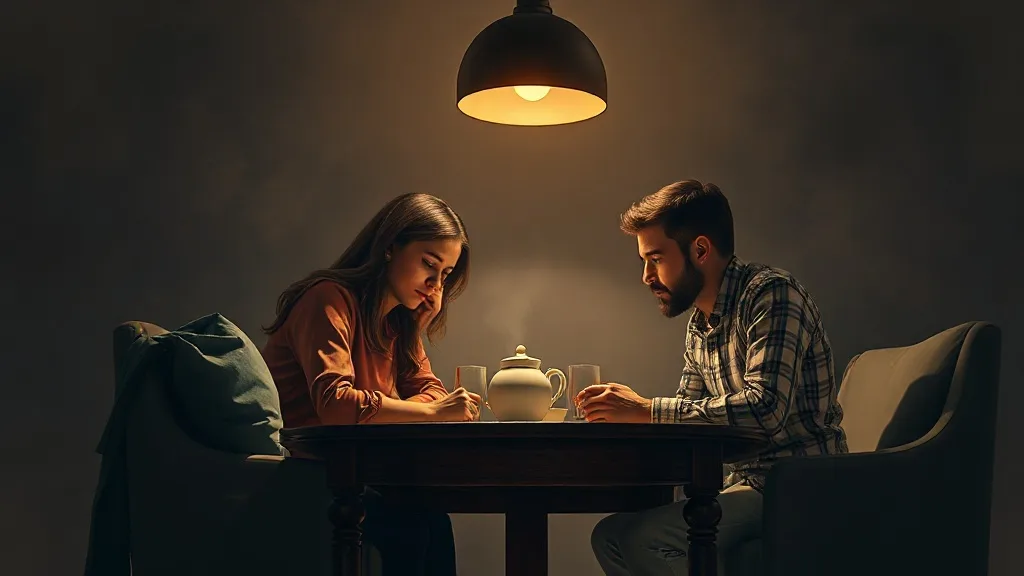
You're curled up on the couch, lost in a quiet moment, when your partner walks in, slightly agitated from their day. Before they even utter a word, you feel it—that familiar ripple of unease, a sudden tension in your shoulders. Your mood shifts instantly, absorbing their stress as if it were your own. Sound familiar? If so, you might be a Highly Sensitive Person (HSP), and you're likely no stranger to the unique complexities that arise in highly sensitive person relationships.
It's not a flaw, or a weakness, but a distinct personality trait found in about 15-20% of the population, first identified by Dr. Elaine Aron in the 1990s. This isn't about being shy or introverted, though many HSPs are. It's about a nervous system that processes information more deeply, noticing subtleties others miss, and feeling emotions—both positive and negative—with greater intensity. While this depth can lead to incredible empathy and rich inner lives, it often makes navigating the give-and-take of intimate partnerships a minefield of potential misunderstandings and overwhelm.
Understanding the Highly Sensitive Person Trait
Honestly, when I first learned about the Highly Sensitive Person trait, a lot of my own experiences suddenly clicked into place. It’s a neurobiological difference, not just a personality quirk, meaning our brains are actually wired to perceive and react to stimuli differently. This 'depth of processing' is a hallmark, meaning HSPs don't just skim the surface; they dive deep into every piece of information, every interaction, every emotional cue.
📖 Recommended: Dollar-Cost Averaging: The Investing Strategy That Removes All Emotion
Think about it: while others might brush off a sarcastic comment, an HSP might spend hours replaying it, dissecting its layers, and feeling its sting. This deep processing extends to environments too. A busy restaurant, a flickering fluorescent light, or even a strong scent can be genuinely overwhelming, leading to what Dr. Aron calls 'overstimulation.' In the context of highly sensitive person relationships, this means the ordinary friction of daily life—a raised voice, an unanswered text, a change in plans—can feel like a full-blown crisis to an HSP, even if their partner perceives it as minor.
A 2019 study published in the Journal of Personality and Social Psychology (n=450 couples) highlighted that partners of HSPs often report their sensitive partners being more attuned to their emotional states and environmental cues, but also more prone to feeling drained by conflict. This isn't because HSPs are 'too emotional,' but because their nervous systems are constantly working overtime, soaking up vast amounts of information. This constant sensory and emotional intake makes managing internal and external demands a persistent challenge, especially within the close confines of a romantic bond.
Emotional Intensity and Its Impact on Highly Sensitive Person Relationships
What Research Actually Shows About HSPs and Intimacy
Look, the science backs up what many HSPs instinctively feel. A landmark 2014 fMRI study conducted by Dr. Bianca Acevedo and colleagues, published in the journal Brain and Behavior, revealed that HSPs showed significantly greater activation in brain regions associated with awareness, empathy, and responsiveness to emotional stimuli—especially when viewing images of people experiencing emotions. This heightened neural activity isn't just about feeling more; it means their brains are literally working harder to process emotional information. This deeper processing often translates to a profound capacity for love, empathy, and loyalty in their relationships, but also makes them more susceptible to emotional exhaustion and stress.
Research also delves into attachment styles, which play a critical role in how we form and maintain bonds. While not exclusively tied to the HSP trait, many HSPs tend to lean towards anxious or disorganized attachment, precisely because of their heightened sensitivity to perceived threats or inconsistencies in their partner's affection. A 2018 paper in Personality and Individual Differences by Schlegel et al. found a correlation between high sensitivity and increased anxiety in attachment, suggesting that the deep processing of social cues can amplify fears of abandonment or rejection. Understanding your attachment style, whether you're an HSP or not, is crucial for navigating relationship dynamics.
Furthermore, the unique challenges faced by HSPs in relationships aren't just anecdotal. A 2022 meta-analysis published in the Journal of Social and Personal Relationships, encompassing data from over 30 studies (N > 10,000 participants), indicated that while HSPs report higher levels of relationship satisfaction when their needs for understanding and quiet time are met, they also report significantly higher levels of relationship strain and dissatisfaction when these needs are overlooked. This robust finding underscores that the struggles aren't imagined; they are a direct consequence of an often-misunderstood neurobiological trait interacting with the complexities of human connection.
Cultivating Connection: Practical Strategies for HSPs and Their Partners
- Educate Yourselves and Each Other: This is step one. Both you and your partner need to genuinely understand what it means to be an HSP. Read books by Dr. Elaine Aron, listen to podcasts, and discuss what it feels like for you. Knowledge dispels judgment and paves the way for empathy. It’s not about making excuses, but about building awareness.
- Establish Clear Boundaries (Emotional and Physical): For HSPs, boundaries are non-negotiable. This means communicating when you need quiet time, saying no to plans that will overstimulate you, and clearly defining what emotional information you're willing to absorb. For partners, respect these boundaries without taking them personally.
- Prioritize Self-Care and Decompression: Your sensitive nervous system needs regular downtime. Schedule it. Whether it's 20 minutes of quiet reading, a solo walk in nature, or a warm bath, make these moments sacred. Explain to your partner that this isn't a luxury; it's essential maintenance for your well-being and, by extension, the health of your relationship.
- Develop a 'Cool-Down' Strategy for Conflict: Since conflict can be so overwhelming, agree on a pre-determined signal or phrase that allows one or both of you to pause an argument, take a break, and return to the discussion when calmer. This prevents emotional overwhelm and allows for more constructive dialogue.
- Practice Mindful Communication: For HSPs, this means communicating needs clearly without over-apologizing or fearing rejection. For partners, it means listening actively, validating feelings, and choosing gentle language, especially when discussing sensitive topics. Focus on 'I' statements to express feelings rather than 'you' statements that can sound accusatory.
- Challenge Overthinking and Catastrophizing: When your mind starts spiraling after a minor interaction, gently question those thoughts. Is there another interpretation? What's the evidence? Sometimes, simply acknowledging 'This is my HSP brain over-processing' can provide enough distance to prevent a full-blown emotional reaction.
- Seek Support When Needed: If you find yourselves consistently struggling, don't hesitate to seek out a therapist who understands the HSP trait and relationship dynamics. A neutral third party can provide invaluable tools and insights to help both partners navigate these unique challenges.
Dispelling Misconceptions About Sensitivity in Love
Here's the thing: many common beliefs about highly sensitive person relationships are simply wrong, and they contribute to unnecessary strain. Myth: HSPs are fragile and can't handle real-world relationships. Reality: HSPs possess immense inner strength and resilience, often forged through years of navigating an overstimulating world. While they might need more downtime or communicate differently, their capacity for deep connection, loyalty, and empathy makes them incredibly valuable partners. A 2020 study in the Journal of Individual Differences actually found that HSPs often report higher levels of personal growth and post-traumatic growth, suggesting an ability to transform intense experiences into profound wisdom.
Another prevalent myth is that HSPs are 'too emotional' or 'dramatic.' Reality: Their emotional responses are simply more intense due to their deeper processing, not because they are intentionally overreacting. What might be a 2/10 emotional response for a non-HSP could be a 7/10 for an HSP—it's a difference in neural wiring, not a choice. This isn't manipulation; it's genuine internal experience. When partners understand this physiological difference, they can shift from judgment to compassion, recognizing that the emotional landscape of an HSP is simply richer and more vibrant, demanding a different kind of understanding and patience.
Finally, there's the misconception that HSPs are inherently introverted or shy. Reality: While a significant portion of HSPs are introverted (around 70%), roughly 30% are extroverted HSPs. These individuals still process deeply and are easily overstimulated, but they also crave social interaction. Their sensitivity might manifest as feeling overwhelmed in large groups or needing extensive recovery time after social events, even if they enjoyed them. This distinction is crucial because it highlights that sensitivity isn't one-size-fits-all; it's a spectrum of experience that requires nuanced understanding in all highly sensitive person relationships, regardless of a partner's social inclination.
Frequently Asked Questions
Can a highly sensitive person have a healthy, long-term relationship?
Absolutely. While highly sensitive person relationships present unique challenges, HSPs have a tremendous capacity for deep empathy, loyalty, and profound connection. With self-awareness, clear communication, and partners who understand and respect their needs for processing and downtime, HSPs can—and do—build incredibly rich and lasting relationships. Studies, like the 2017 research in the Journal of Social and Personal Relationships, confirm that when needs are met, HSPs report high relationship satisfaction.
How can I, as a partner of an HSP, better support them?
The best support comes from understanding and validation. Educate yourself about the HSP trait, listen actively to their needs without judgment, and respect their requirement for quiet downtime. Learn to communicate gently, especially during conflict, and understand that their intense emotional reactions are not personal attacks, but a function of their nervous system. Creating a calm home environment can also significantly reduce their daily overwhelm.
Are highly sensitive people more prone to anxiety in relationships?
Yes, HSPs are generally more prone to experiencing anxiety, and this often extends to their relationships. Their deep processing means they ruminate more, worry about perceived criticisms, and can become easily overwhelmed by emotional intensity or conflict. A 2023 study in Psychological Medicine (n=700 adults) found a significant correlation between high sensitivity and increased general anxiety, which can be amplified in the intimate context of a relationship where vulnerabilities are high.
What's the difference between being an HSP and being an introvert?
While many HSPs are introverted, the two traits are distinct. Introversion describes where you get your energy from (solitude), while high sensitivity describes how you process information (deeply and intensely). You can be an extroverted HSP (you love people but get overstimulated easily) or an insensitive introvert (you prefer alone time but don't process external stimuli with intense depth). The key is the depth of processing and reactivity to stimuli for HSPs.
The Bottom Line
Being a Highly Sensitive Person in a relationship isn't a curse; it's a unique way of experiencing the world and love. Yes, it comes with challenges—moments of overwhelm, miscommunication, and the constant need for downtime. But it also comes with immense gifts: profound empathy, a rich inner life, a capacity for deep connection, and an unparalleled ability to notice the subtle beauties of life. Navigating highly sensitive person relationships means both partners must commit to understanding, compassion, and open communication. It's about creating a space where sensitivity isn't just tolerated, but truly valued. It won't always be easy, but with intention, awareness, and a lot of grace, it can be deeply rewarding and incredibly transformative for everyone involved.