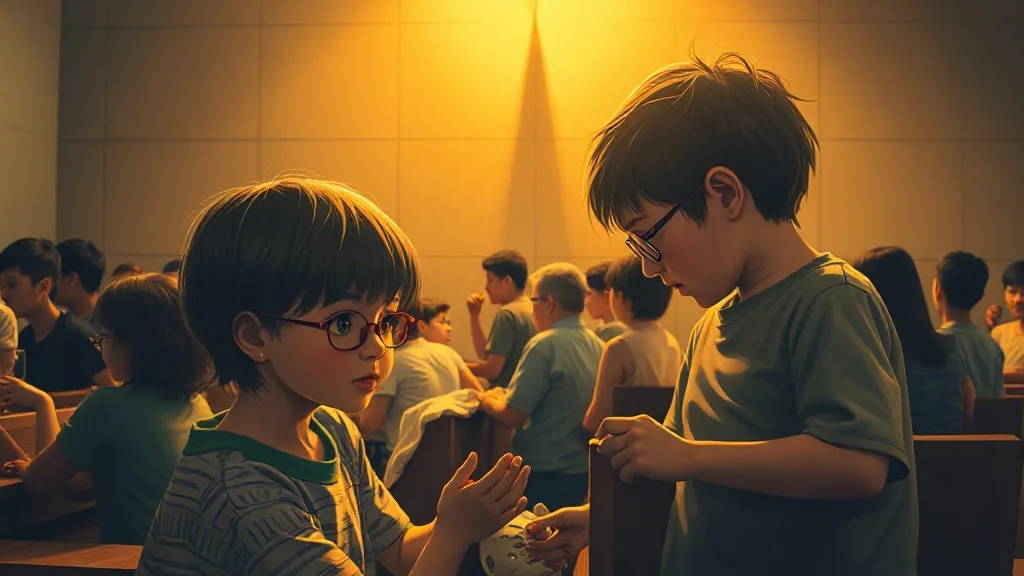
Imagine a child, maybe just seven or eight years old, who regularly wakes up before dawn to make breakfast for their younger siblings because their parent is too depressed to get out of bed. Or consider a teenager, whose mother confides in them about her marital problems, financial worries, and deepest insecurities, treating them more like a therapist than a child. These aren't isolated incidents; they're hallmarks of a phenomenon known as parentification. It's a subtle, insidious form of role reversal where a child takes on adult responsibilities — responsibilities that fundamentally exceed their developmental capacity. The long-term parentification effects can be truly devastating, shaping an individual's entire life in profound ways.
Understanding What Is Parentification: The Child Who Becomes the Adult
Honestly, when we talk about parentification, we're discussing a deep imbalance in the family system. It’s when the usual boundaries between parent and child blur, sometimes to the point of disappearing entirely. The child essentially steps into a parental role, not out of choice, but out of necessity. This isn't just about a kid helping out around the house; it's about a consistent, pervasive pattern where their emotional or practical needs are sacrificed for the supposed well-being of a parent or the family unit.
Researchers often categorize parentification into two main types: emotional and instrumental. Emotional parentification involves the child becoming a parent's confidant, mediator, or emotional support system. Think of the child who comforts an adult parent after a bad day, or mediates arguments between their parents. Instrumental parentification, on the other hand, is more about tangible tasks, like managing household chores, paying bills, caring for younger siblings, or working to support the family. A 2019 study published in the Journal of Family Psychology (n=450 families) highlighted that while instrumental tasks are often more visible, the emotional burden carries a heavier toll on a child's psychological development, often leading to complex parentification effects later in life.
📖 Recommended: How to Negotiate Your Salary: Scripts and Strategies That Actually Work
This role reversal robs children of their own childhood. They miss out on opportunities for carefree play, self-discovery, and simply being nurtured. Instead, they're preoccupied with adult concerns, carrying burdens no child should ever bear. It’s a profound violation of the natural order, and its echoes can resonate for decades.
What Research Actually Shows About the Long-Term Impact
Look, the impact of parentification isn't just theoretical; it's heavily documented. The long-term parentification effects are far-reaching and can seriously compromise an adult's mental health and relationships. Research consistently points to higher rates of anxiety, depression, and even complex PTSD among individuals who experienced parentification. A seminal longitudinal study by Dr. Gregory Jurkovic and colleagues, published in the Journal of Child and Family Studies in 1997, followed parentified individuals into adulthood and found significant correlations with chronic stress, difficulty forming secure attachments, and a pervasive sense of loneliness. Sound familiar?
I've seen this pattern with countless clients: adults who feel perpetually exhausted, unable to say no, and constantly seeking external validation because their internal compass for self-worth was never properly developed. They're often hyper-responsible, perfectionistic, and struggle immensely with true intimacy, because intimacy requires vulnerability, and vulnerability feels dangerous when you've always had to be the strong one. This relentless drive to care for others, without ever feeling truly cared for themselves, takes a heavy toll. The American Psychological Association's resources on trauma clearly outline how such early relational disruptions can lead to lasting psychological scars, including difficulty regulating emotions and forming healthy attachments.
Furthermore, the National Institute of Mental Health (NIMH) highlights the increased risk of mood disorders, including major depression, in individuals who faced chronic stress and emotional neglect during childhood — a direct consequence of parentification. These individuals often carry an immense, unspoken grief for the childhood they never had, leading to feelings of emptiness or a lack of genuine joy. They might struggle with identity, unsure of who they are outside of their caregiving role. It's a profound identity crisis rooted in childhood survival strategies.
How to Begin Healing and Breaking the Cycle — Practical Steps
- Acknowledge and Validate: You didn't choose this. It wasn't fair. Allow yourself to feel the anger, sadness, and grief for what was lost. Understanding that your experiences were valid and impactful is the first, crucial step toward healing.
- Seek Professional Help: Therapy, especially trauma-informed therapy, can be incredibly beneficial. A therapist can help you process the childhood experiences, identify deeply ingrained patterns, and develop healthier coping mechanisms. Look for therapists specializing in family systems, attachment, or inner child work.
- Set Boundaries: This is tough, especially with family, but it’s essential. Learn to say no without guilt. You are not responsible for your parents' happiness or well-being anymore. This might mean limiting contact, refusing to engage in old patterns, or redirecting conversations that cross your boundaries.
- Reclaim Your Childhood: Engage in activities purely for joy, not productivity. Allow yourself to be playful, messy, and imperfect. Discover hobbies you genuinely enjoy. This can feel awkward at first because you weren't given permission to do so as a child, but it's vital for your spirit.
- Grieve the Lost Childhood: It's okay to mourn the childhood you deserved but never had. Write a letter to your younger self, allow yourself to cry, or engage in rituals that acknowledge this loss. This isn't about blaming; it's about processing.
- Build a Supportive Network: Surround yourself with people who see you, value you, and support you without expecting you to constantly care for them. Seek out friendships and relationships where caregiving is reciprocal, not one-sided.
- Practice Self-Compassion: You've been incredibly strong. Now, turn that strength inward. Treat yourself with the same kindness and understanding you would offer a struggling child. You deserve care, rest, and nurturing.
Common Myths and Misconceptions About Parentification
One prevalent myth is that parentification makes children more resilient or responsible adults. Reality: While children who are parentified do often develop a heightened sense of responsibility and can appear mature for their age, this comes at a significant cost. They become 'pseudo-adults' who are often highly anxious, lacking in spontaneity, and deeply uncomfortable with receiving care. This isn't true resilience; it's a survival mechanism that sacrifices healthy emotional development for perceived functionality. The adult might be capable, but they are often internally fractured, carrying a heavy, invisible weight.
Another misconception is that parentification only happens in families with overt abuse or neglect. Reality: While it certainly occurs in such environments, parentification can also arise in seemingly 'functional' families where a parent might be struggling with chronic illness, mental health issues like depression or anxiety, or even just immaturity. The parent may genuinely love their child but is simply unable to meet their own emotional or practical needs, inadvertently leaning on the child. It’s often subtle, an unstated expectation, rather than an explicit demand, which makes it even harder to identify and address.
Finally, there's the myth that parentified children somehow benefit from their experiences because they 'learn life skills' early. Reality: While they might learn to cook or manage money, they often miss out on crucial developmental milestones related to emotional regulation, identity formation, and healthy attachment. The skills they gain are often borne out of trauma, not healthy development. They learn to suppress their own needs, leading to lifelong patterns of people-pleasing and difficulty asserting themselves. The parentification effects are not a benefit; they're a burden that requires significant unpacking and healing.
Frequently Asked Questions
Is parentification a form of child abuse?
While parentification isn't always legally classified as abuse, it is a form of emotional neglect and can be psychologically damaging. It often co-occurs with other forms of neglect or abuse, as it fundamentally involves a failure to meet a child's developmental needs and provide a safe, nurturing environment. The emotional and developmental harm can be profound, akin to trauma.
Can parentification have positive outcomes?
Some researchers have explored 'adaptive' parentification, suggesting that minor, age-appropriate responsibilities can foster competence. However, true parentification, where responsibilities are excessive and chronic, is overwhelmingly associated with negative psychological outcomes. Any 'positives' (like responsibility) are usually outweighed by the significant developmental costs, emotional burden, and long-term parentification effects on mental health and relationships.
How do I know if I was parentified as a child?
Common signs in adulthood include a pervasive sense of responsibility for others, difficulty accepting help, chronic people-pleasing, feeling guilty when you prioritize your own needs, struggles with boundaries, high anxiety, depression, and a feeling that you 'missed out' on your childhood. Reflect on whether you consistently felt like you were your parent's emotional support or managed adult tasks.
What can parents do to prevent parentification?
Parents should ensure they meet their own emotional needs, seek support from other adults, and avoid confiding adult problems in children. Foster open communication, but always maintain appropriate boundaries between adult and child roles. Encourage play and age-appropriate responsibilities, but never let a child's needs be secondary to an adult's. Prioritize their childhood above all else.
The Bottom Line
Parentification is a heavy, invisible backpack that far too many children are forced to carry. It's not about making a kid 'tougher' or 'more responsible'; it's about shifting an adult's burden onto vulnerable shoulders, often with devastating long-term parentification effects. If you recognize these patterns in your own life, please know you’re not alone, and it wasn't your fault. Healing is possible, but it requires acknowledging the past, understanding its impact, and consciously choosing to reclaim the parts of yourself that were lost. It's a journey of self-compassion, boundary-setting, and finally allowing yourself to be the cared-for individual you always deserved to be.