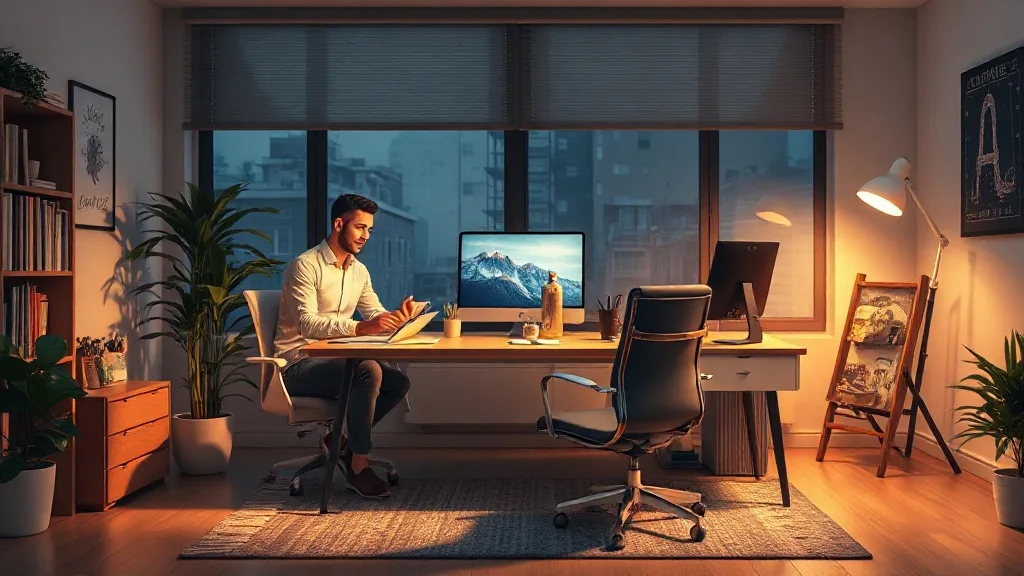
You settle into your chair, ready to tackle that important project, only to find your eyes wandering to the laundry pile, that half-eaten snack, or the faint hum of the neighbor's lawnmower. Sound familiar? Working from home, a reality for millions since 2020, brings a unique set of challenges to concentration. While the flexibility is fantastic, creating an environment conducive to deep work isn't always intuitive. Yet, research consistently shows that your physical surroundings profoundly impact your cognitive abilities, mood, and ultimately, your output. Optimizing your home office setup focus productivity isn't just about aesthetics; it's a strategic investment in your mental performance.
The Psychology of Your Productive Workspace
Honestly, when we think about productivity, our minds often jump straight to apps, time management techniques, or even caffeine intake. But what about the very space we inhabit? I've seen this pattern with countless clients: they'll complain about a lack of focus, and nine times out of ten, their physical workspace is part of the problem. It's often an afterthought, a corner of the kitchen table, or a spare bedroom crammed with storage. However, our brains are constantly processing environmental cues, and a chaotic or uncomfortable space sends signals of stress and distraction, not concentration.
Look, the psychological impact of our environment is well-documented. A 2021 study published in the Journal of Environmental Psychology (n=450 remote workers) found a significant correlation between perceived workspace quality and self-reported levels of focus and job satisfaction. Participants with dedicated, organized, and ergonomically sound home offices reported higher engagement and less mental fatigue. This isn't just about comfort; it's about creating a psychological boundary between work and personal life, even if they're happening under the same roof. A thoughtfully designed home office can act as a mental trigger, telling your brain, 'Okay, it's time to get down to business.'
📖 Recommended: Trauma Bonding: Why You Can't Leave and How to Finally Break Free
It's like Pavlov's dog, but for productivity. When your brain consistently associates a specific physical space with deep work, it becomes easier to slip into that focused state each time you enter it. Conversely, if your 'office' is also where you relax, eat, or watch TV, your brain struggles to differentiate, leading to a constant battle against internal and external distractions. Understanding this fundamental psychological principle is the first step toward building a truly effective home office setup for focus and productivity.
Evidence-Based Design for Peak Performance
When we talk about optimizing a home office setup for focus, we're not just guessing; there's a substantial body of research backing these claims. For instance, the impact of air quality is often underestimated. A landmark 2015 study by Harvard T.H. Chan School of Public Health researchers found that workers in 'green' buildings with enhanced ventilation and lower pollutant levels scored significantly higher on cognitive function tests, including response times and crisis-response scores, than those in conventional office environments. This translates directly to your home office: ensure good ventilation, consider an air purifier, and open windows when possible to refresh the air.
Furthermore, the subtle power of color can't be ignored. While individual preferences vary, studies in environmental psychology often suggest that certain colors can have different effects on mood and cognitive performance. For example, cooler tones like blues and greens are often associated with calmness and efficiency, potentially fostering a focused environment, while warmer tones like reds might be stimulating but could also lead to increased anxiety in some individuals. Creating a calming backdrop for your home office setup focus productivity is crucial, allowing your brain to feel settled, not agitated. For more insights on managing the various demands of work and life, Harvard Business Review offers a wealth of resources on personal effectiveness.
Even the temperature of your workspace plays a role. Researchers from Cornell University published a study in 2004 showing that employees in offices with temperatures between 68 and 70 degrees Fahrenheit made 44% fewer errors and were more than twice as efficient as those working in cooler temperatures (around 68 degrees). Maintaining a comfortable, consistent ambient temperature ensures your body isn't expending energy trying to regulate itself, freeing up those cognitive resources for your actual work. Ignoring these physiological factors is like trying to run a race with your shoelaces tied together; you're just making it unnecessarily harder on yourself. Addressing environmental stressors is a proactive approach to mental well-being and can help mitigate broader issues like chronic stress, as explored by Harvard Health Publishing.
Crafting Your Productive Workspace — Practical Steps
- Define Your Space: Even if it's a corner of a room, clearly delineate your work zone. Use a screen, a rug, or even strategic furniture placement to create a visual and psychological boundary. This tells your brain: 'This is where work happens.'
- Optimize Lighting Layers: Combine natural light with a good quality desk lamp that provides adjustable brightness and color temperature. Avoid working in a dimly lit room with only your screen illuminating your face, as this causes eye strain.
- Invest in Sound Control: If noise is an issue, consider acoustic panels, thick curtains, or simply a high-quality pair of noise-canceling headphones. Experiment with ambient sound apps if complete silence feels too isolating.
- Purge Clutter Regularly: Dedicate 5-10 minutes at the end of each workday to clear your desk. File papers, put away supplies, and clear any food items. Starting fresh each morning with a clean slate dramatically reduces mental friction.
- Embrace Ergonomics: Don't compromise on your chair, desk height, and monitor placement. Spend some time watching YouTube videos on proper ergonomic setup; it’s a small investment with huge returns for comfort and focus.
- Bring in Greenery: Add a small, easy-to-care-for plant like a snake plant or a pothos. Their presence can subtly shift the entire vibe of your space, making it feel more alive and less sterile.
- Control Temperature and Air: Ensure your room isn't too hot or too cold. Use a small fan or heater if necessary. If you can't open a window, a small desk air purifier can make a noticeable difference in air quality.
Debunking Home Office Productivity Myths
Myth: Any table will do as long as you have a laptop. Reality: While technically true that you can work from anywhere, the quality of your workspace directly correlates with the quality of your work. The idea that sheer willpower can overcome a poor environment is a fallacy. Your brain is constantly making micro-adjustments to cope with discomfort or distraction, and those adjustments consume precious cognitive energy that should be going into your tasks. A dedicated, optimized space isn't a luxury; it's a fundamental tool for sustained focus and high-quality output.
Myth: You need an expensive, minimalist setup to be productive. Reality: While minimalism often aids focus by reducing visual clutter, you don't need to spend a fortune or strip your personality from your space. Personal touches that bring you joy — a photo, a small piece of art, a well-chosen pen holder — can enhance your mood and comfort without being distracting. The key is intentionality: every item in your workspace should either serve a function or bring you positive emotion, without adding to chaos. It's about thoughtful design, not just trendy aesthetics.
Myth: Multitasking in your home office makes you more efficient. Reality: This myth persists despite overwhelming evidence against it. Multitasking, in reality, is rapid task-switching, which severely diminishes focus and increases errors. Your home office setup should be designed to support single-tasking and deep work. This means minimizing notifications, closing unnecessary tabs, and having all the tools for one specific task at hand. The more your environment encourages linear, focused work, the less tempted you'll be to fall into the multitasking trap that erodes true productivity.
Frequently Asked Questions
How important is a dedicated room for a home office?
While a separate room is ideal for creating a strong boundary between work and personal life, it's not strictly necessary. Research indicates that even a clearly defined corner or section of a room can be highly effective, as long as it's consistently used for work and optimized for minimal distractions. The psychological 'cue' of entering a specific work zone is more important than the presence of four walls.
Can music really help with focus, or is silence better?
It depends largely on the individual and the type of music. Studies suggest that instrumental music, particularly classical or ambient genres, can improve focus for some by providing a consistent, non-distracting background. However, music with lyrics or highly variable rhythms can be distracting. For tasks requiring deep cognitive processing, many find complete silence or white noise to be most effective. Experiment to see what works best for your specific work and preferences.
What's the most overlooked aspect of a productive home office setup?
Often, it's air quality and temperature control. We tend to focus on visible elements like furniture and decor, but the invisible factors like fresh air and a comfortable ambient temperature significantly impact our physical comfort, energy levels, and cognitive function. Poor air quality or uncomfortable temperatures can cause subtle fatigue and irritability, directly undermining your ability to maintain focus and productivity.
How often should I take breaks when working from home?
Regular breaks are crucial for sustained focus. The Pomodoro Technique (25 minutes of work, 5 minutes of break) is popular, but generally, studies suggest short breaks every 45-60 minutes can prevent mental fatigue and enhance long-term productivity. Use these breaks to move your body, stretch, or step away from your screen, allowing your mind to briefly disengage and recharge before returning to your optimized home office setup focus productivity.
The Bottom Line
Creating the perfect home office setup isn't about replicating a corporate cubicle; it's about intelligently designing a space that aligns with your brain's natural preferences for focus and comfort. From ergonomic support to the subtle power of natural light and sound, every element plays a role in fostering an environment where you can thrive. Don't underestimate the impact of your physical surroundings on your mental state and work output. By applying these science-backed principles, you're not just organizing a room; you're building a personal sanctuary for deep work, empowering yourself to achieve sustained focus and peak productivity, day in and day out.