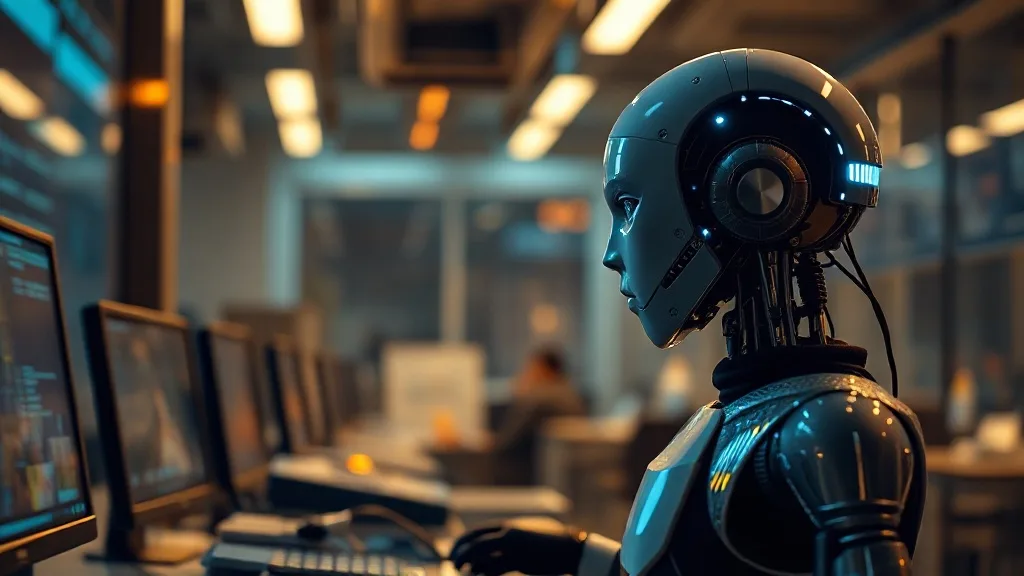
Remember when we thought robots would just handle factory assembly lines? I certainly do. Now, the conversation has moved from physical labor to cognitive tasks, and it’s a big leap. We’re talking about algorithms writing articles, designing graphics, and even assisting with complex medical diagnoses. Suddenly, the specter of automation isn’t just looming over manufacturing jobs, but over desks in offices, studios, and even operating rooms. Sound familiar? This isn't science fiction anymore; it's a rapidly unfolding reality, and many professionals are feeling a genuine tremor of anxiety about what it means for their livelihood. To effectively ai proof your career future skills has become less of a suggestion and more of a directive.
Honestly, the pace of change is dizzying. Every week, it feels like there’s a new AI breakthrough that sends another ripple through our professional assumptions. The question isn't whether AI will impact your job—it will. The real question is how you're preparing for that impact, right now. It’s about understanding which skills are becoming obsolete and, more critically, which human attributes are becoming indispensable. This isn’t a passive waiting game; it’s an active strategic pivot.
The Shifting Sands of Employment: What Automation Really Means
Look, the idea of machines replacing human labor isn't new. From the Luddites smashing looms in the 19th century to assembly line workers being replaced by robotic arms, history is full of these transitions. Each wave brought disruption, but also new opportunities and entirely new industries. What’s different now is the nature of the tasks being automated. We’re not just talking about repetitive physical work; we’re talking about cognitive, analytical, and even creative functions that were once considered exclusively human domains.
📖 Recommended: Burnout Recovery: How Long It Actually Takes and What Helps
A recent 2023 report from Goldman Sachs estimated that generative AI could expose 300 million full-time jobs to automation across the US and Europe. That's a staggering number, suggesting that roughly two-thirds of current jobs could be partially or fully automated. But here’s the thing: it also noted that most jobs and industries are only partially exposed to automation, meaning AI is more likely to augment tasks rather than completely eliminate roles. This nuance is crucial. It’s not about machines doing everything; it's about machines changing what 'everything' entails for us.
I've seen this pattern with every major technological leap: initial panic, followed by adaptation and evolution. The internet didn't eliminate journalism; it changed it dramatically. Desktop publishing didn't kill graphic design; it democratized it and shifted the focus to higher-level creative strategy. AI is doing the same thing, forcing us to re-evaluate where human value truly lies in the professional sphere.
Beyond Technical Skills: The Power of Human-Centric Attributes
We often get caught up in the technical arms race—which coding language to learn, which AI tool to master. While those are important, the real long-term advantage lies in cultivating what I call 'human-centric attributes.' These are the skills that AI, at its current stage, simply cannot replicate with any true fidelity.
Consider emotional intelligence. A 2019 study published in the Journal of Organizational Behavior (n=300 managers) found a significant correlation between higher emotional intelligence and job performance, particularly in roles requiring leadership and client interaction. AI can't genuinely empathize with a distressed client or motivate a disillusioned team member. It can't understand the subtle non-verbal cues in a difficult negotiation or offer genuinely comforting support during a crisis. These are the nuances that make us effective in complex, unpredictable human environments. This is why fostering your EQ is a cornerstone of how to ai proof your career future skills.
Furthermore, ethical reasoning, creativity, and strategic foresight demand a level of consciousness, values, and nuanced judgment that AI systems lack. While AI can generate novel combinations of data, true innovation often comes from breaking existing paradigms, a process deeply rooted in human intuition and subjective experience. As technology handles the routine, our capacity for these higher-order human functions becomes not just valuable, but irreplaceable. You can learn more about managing your professional development and personal growth through these changes at Harvard Business Review's 'Managing Yourself' section.
Your Personal AI Strategy: Practical Steps to Adapt
- Upskill Deliberately: Identify the AI tools and platforms most relevant to your current or desired industry. Dedicate regular time—say, an hour a week—to learning and experimenting with them. Many free and low-cost online courses exist, from Coursera to specific software tutorials.
- Seek Hybrid Roles: Look for opportunities that blend your existing expertise with emerging AI applications. These 'hybrid' roles are where the real innovation and demand will be, as they require both deep domain knowledge and technological fluency.
- Mentor and Be Mentored: Connect with people who are further along in their AI journey, and be willing to mentor others. This reciprocal learning is invaluable, solidifying your own understanding while building crucial networks.
- Focus on Projects, Not Just Tasks: Shift your mindset from completing isolated tasks (which AI can do) to managing complex projects that require strategic oversight, interpersonal coordination, and creative problem-solving.
- Practice Prompt Engineering: Learn how to effectively communicate with AI models. The quality of AI output is directly tied to the quality of the input. Mastering prompt engineering is a skill that will serve you across many AI applications.
- Develop a Growth Mindset: Embrace challenges and setbacks as opportunities for learning. A fixed mindset—believing your abilities are static—will be a significant barrier in an era of constant change.
- Stay Informed: Regularly read reputable tech news, industry analyses, and research papers about AI advancements. Understanding the trajectory of AI will help you anticipate future skill demands.
Debunking the Doomsday: Common AI Job Myths
When talk of AI and jobs comes up, it's easy for fear to take over, fueled by sensational headlines. Let's bust a few common myths that often cause unnecessary alarm.
Myth: All jobs are going to disappear. Reality: While some routine and predictable jobs will undoubtedly be automated, the idea that AI will eliminate all human employment is largely unfounded. Historically, technological advancements have created more jobs than they destroyed, albeit different kinds of jobs. The World Economic Forum's 2023 Future of Jobs Report, which surveyed over 800 companies, predicted a net creation of 69 million new jobs over the next five years, even as 83 million are displaced. AI is a tool, and like all tools, it requires human architects, operators, ethicists, and innovators. It shifts the nature of work, rather than erasing it entirely.
Myth: Only tech experts will survive. Reality: This couldn't be further from the truth. While technical skills are valuable, human-centric skills like critical thinking, emotional intelligence, creativity, and cross-cultural communication are becoming more, not less, important. These are the skills that AI struggles with, and they are essential in every industry, from healthcare to hospitality, education to finance. The ability to integrate AI into non-tech roles—to use it as an assistant for writing, data analysis, or creative brainstorming—will be critical for a wide array of professionals.
Myth: Learning AI is too complex for me. Reality: Like any new technology, AI has a learning curve, but it's not exclusively for computer scientists. Many AI tools are designed with user-friendly interfaces, abstracting away much of the underlying complexity. Learning to *use* AI is often more about understanding its capabilities and limitations, and how to prompt it effectively, rather than needing to code it yourself. Think of it like learning to use a complex software application; you don't need to be a programmer to master it. The key is curiosity and persistence, not necessarily a PhD in machine learning.
Frequently Asked Questions
Will AI really take my job?
For most people, AI is more likely to change their job than eliminate it. Routine, repetitive tasks are most vulnerable to automation. However, roles requiring creativity, critical thinking, emotional intelligence, and complex human interaction are far more resilient. Focusing on these uniquely human capabilities will significantly reduce your risk.
What are the most important skills to learn right now?
Beyond specific technical AI tool proficiencies, prioritize skills like critical thinking, complex problem-solving, creativity, emotional intelligence, and adaptability. These are the 'soft skills' that AI struggles to replicate, making them increasingly valuable in a human-AI collaborative workplace. Continuous learning is also paramount.
How quickly do I need to adapt to AI?
The pace of AI development is rapid, so proactive adaptation is key. Starting now is crucial. Even dedicating a few hours each week to understanding AI tools, exploring new concepts, and identifying how AI might impact your industry can put you ahead. Waiting until changes are forced upon you will make the transition much harder.
Can AI help me find a new job or career?
Yes, absolutely. AI-powered tools can assist with resume optimization, job search strategies, identifying skill gaps, and even practicing interview responses. Leveraging these tools can significantly enhance your job search effectiveness, helping you discover opportunities you might not have found otherwise and presenting your skills in the best possible light.
The Bottom Line
The future of work is undoubtedly changing, and the rise of AI is a powerful catalyst. It’s natural to feel a mix of apprehension and excitement. But let me tell you, this isn't a dead end for human potential; it's a redirection. Those who will thrive aren't necessarily the ones with the most advanced tech degrees, but those who are most adaptable, most curious, and most deeply human. Focus on cultivating the skills that make you uniquely valuable—your creativity, your empathy, your judgment. Leverage AI as a partner, not a foe. The power to shape your professional future, even in the face of such profound technological shifts, truly rests with you.